


Reviewed by Sung “Sean” Kim, Lead Trial Attorney at BANA LAW, PC. Last reviewed: November 2026.
In California, a case qualifies only when a judge certifies it as a class action, and the starting point is Code of Civil Procedure section 382. That statute allows one or more people to sue for the benefit of all when the question is one of common or general interest to many persons, or when the parties are numerous and it is impracticable to bring them all before the court. Under the California Supreme Court’s decisions, the party asking for certification must show an ascertainable class, substantial benefits from class treatment, and a well-defined community of interest, meaning predominant common questions and representatives with typical claims who can adequately represent the class.
A federal case is measured instead against Federal Rule of Civil Procedure 23, which requires numerosity, common questions, typical claims and adequate representation, plus predominance and superiority for a Rule 23(b)(3) class. Certification is procedural: the California Supreme Court has said it does not ask whether an action is legally or factually meritorious. For injury claims, predominance can be hard to show because exposure, injuries and losses differ, yet each injured person still has an individual claim.
How Do I Know if I Qualify for a Class Action Lawsuit?
In California state court, the burden falls on the person seeking class treatment. The test comes from the California Supreme Court’s decision in Sav-On Drug Stores, Inc. v. Superior Court (2004) 34 Cal.4th 319, which holds that the party seeking certification must establish both an ascertainable class and a well-defined community of interest among class members. The court described that community of interest as three factors: predominant common questions of law or fact, class representatives with claims or defenses typical of the class, and class representatives who can adequately represent the class.
An Ascertainable Class
An ascertainable class is one defined in objective terms that make the eventual identification of its members possible. In Noel v. Thrifty Payless, Inc. (2019) 7 Cal.5th 955, the California Supreme Court described the standard as a class defined in terms of objective characteristics and common transactional facts that make the ultimate identification of class members possible when that identification becomes necessary. The court also held that a representative plaintiff need not introduce evidence establishing how notice will be communicated to individual class members in order to show an ascertainable class. In practice, that points to definitions built on checkable facts, such as who bought a product or lived in an area during a stated period.
Common Questions That Predominate
Predominance asks whether the questions that can be answered for everyone at once outweigh the questions that must be answered person by person. Sav-On held that a class action is not inappropriate simply because each member may at some point be required to make an individual showing as to eligibility for recovery or the amount of damages. Individual questions about causation are a different matter, and the Lockheed Martin decision discussed below shows how they can outweigh the common ones.
Typical Claims and Adequate Representatives
The second and third factors focus on the people who step forward for the group. The class representatives must have claims or defenses typical of the class and must be able to adequately represent it. Federal Rule 23 asks nearly the same questions in Rule 23(a)(3) and (4), requiring that the representatives’ claims or defenses be typical of the class and that the representative parties will fairly and adequately protect the interests of the class.
Substantial Benefits Over Separate Lawsuits
California courts also ask whether class treatment provides substantial benefits both to the courts and the litigants, the state’s version of superiority. Federal Rule 23(b)(3) asks whether a class action is superior to other available methods, and one matter the court weighs is class members’ interests in individually controlling separate actions. That factor is one reason serious injury claims can be harder to group, since a person with large medical bills and lost earnings may want to control their own case.

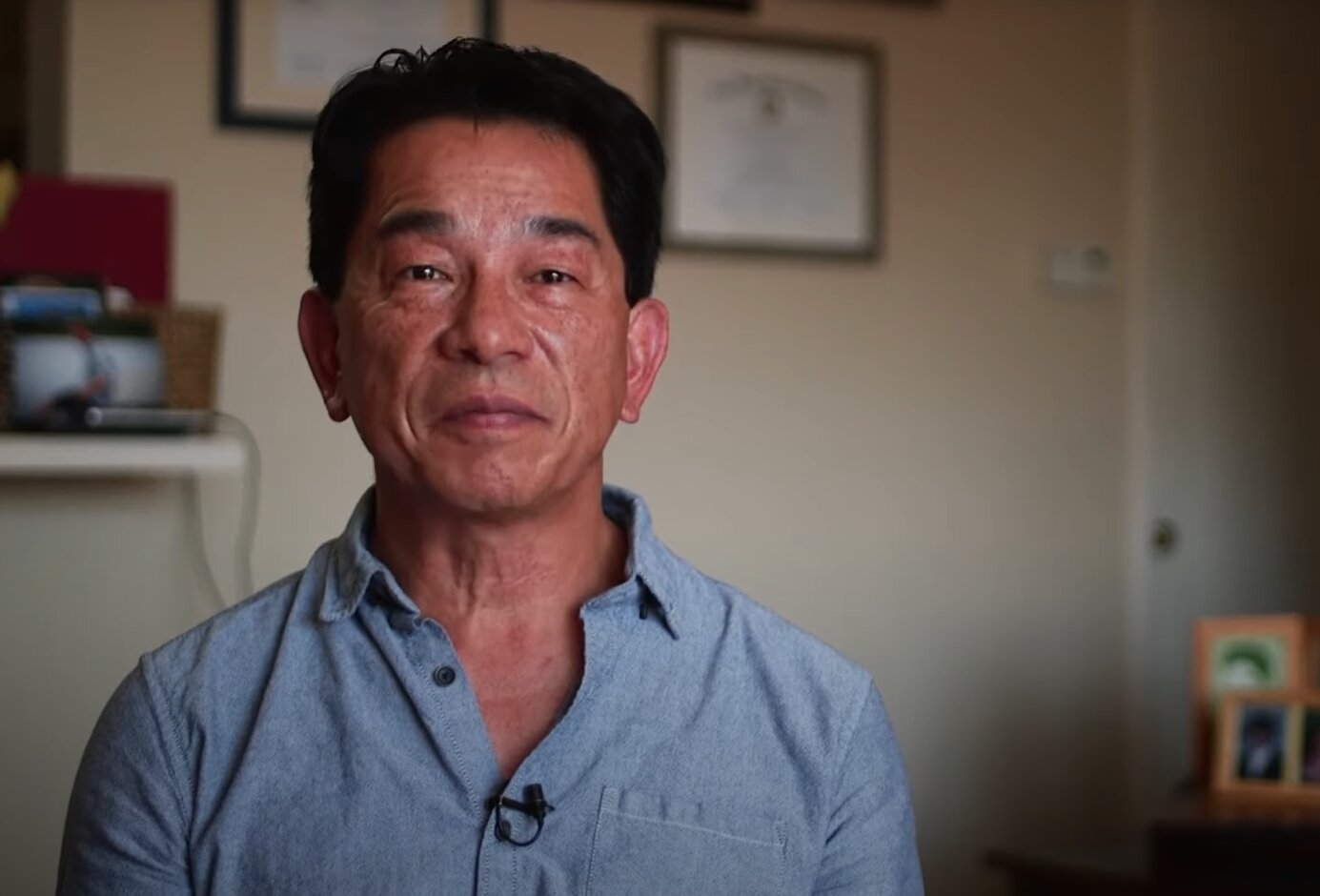
"Even now, after our case is over, Ryan is still there for us whenever we need him. They're good people."
NO FEES UNLESS WE WIN GUARANTEE
NO FEES UNLESS WE WIN GUARANTEE


How Does Federal Rule 23 Compare With California Law?
Rule 23(a) lists four prerequisites for every federal class, and a Rule 23(b)(3) class must also show that common questions predominate and that a class action is superior to other available methods. California’s requirements track those questions closely, but each court applies its own rules and the decisions that interpret them.
California and Federal Certification Requirements Side by Side
| Requirement | California state court | Federal court |
|---|---|---|
| Size of the group | Numerous parties, impracticable to bring all before the court (CCP 382) | Joinder of all members impracticable (Rule 23(a)(1)) |
| Defined class | Objective characteristics and common transactional facts (Noel) | Not listed in Rule 23(a) |
| Common questions | Predominant common questions (Sav-On) | Common questions (Rule 23(a)(2)), plus predominance for a (b)(3) class |
| Representatives | Typical claims and adequate representation (Sav-On) | Typical claims and fair and adequate protection (Rule 23(a)(3) and (4)) |
| Better than separate suits | Substantial benefits to courts and litigants (Sav-On) | Superior to other available methods (Rule 23(b)(3)) |
| Opting out | Notice states the court will exclude a member who asks by a set date (rule 3.766) | Notice states the court will exclude any member who asks (Rule 23(c)(2)(B)) |
| Settlement | Approval after a hearing and a fairness inquiry (rule 3.769) | Approval after a hearing; a binding proposal must be fair, reasonable, and adequate (Rule 23(e)(2)) |
Both columns ask whether one case can fairly decide the claims of many people, and which column applies depends on the court where the case is filed.
Can a Personal Injury Case Be a Class Action?
It can, but only by meeting the same certification test as any other case, and injury claims often run into trouble on predominance. Exposure, injuries and losses differ from person to person, and the federal 1966 Advisory Committee note to Rule 23 says a “mass accident” injuring numerous persons is ordinarily not appropriate for a class action.
The California Supreme Court applied these principles to an exposure case from San Bernardino County in Lockheed Martin Corp. v. Superior Court (2003) 29 Cal.4th 1096. Redlands residents alleged that chemicals discharged by the defendants contaminated the city’s drinking water, and they sought a court-supervised medical monitoring program and punitive damages for the class. The Supreme Court held that the trial court abused its discretion in certifying the classes, because common issues such as duty, breach and the toxicity of the chemicals were outweighed by questions about each person’s dose and individual response. It also said no per se or categorical bar exists to class treatment of medical monitoring claims.
When certification is not realistic, an injured person still has an individual claim for their own medical expenses, lost earnings and other losses, and a Los Angeles personal injury lawyer can evaluate it on its own facts. BANA LAW offers free, confidential consultations 24/7 and works on a no win, no fee basis, with the firm advancing all case costs.
"I felt very protected, especially the way Ryan answered any question I had. I was very happy with the results of my case."
NO FEES UNLESS WE WIN GUARANTEE
NO FEES UNLESS WE WIN GUARANTEE
What Is the Difference Between a Class Action and a Mass Tort Lawsuit?
In a class action, representatives sue for the benefit of everyone in the defined class, and the other members are not separate plaintiffs with complaints of their own. In a mass tort, each injured person files an individual lawsuit, and the courts group those cases for efficiency while each plaintiff keeps their own claim and their own damages. California’s tool is coordination: under Code of Civil Procedure section 404, when civil actions sharing a common question of fact or law are pending in different courts, a petition for coordination may be submitted to the Chairperson of the Judicial Council by the presiding judge of any of those courts, by a party with that judge’s permission, or by all plaintiffs or all defendants in one of the actions.
In federal court, 28 U.S.C. section 1407 lets the Judicial Panel on Multidistrict Litigation transfer civil actions involving one or more common questions of fact, pending in different districts, to one district for coordinated or consolidated pretrial proceedings. Each transferred action must be remanded at or before the end of those pretrial proceedings unless it has already been terminated. For a defective product, our Los Angeles product liability lawyer page covers defect types, common injuries and compensation in an individual claim.
"Our goal is to remove the stress of the case from you, so you can focus on treating your injuries and begin your road to recovery."
NO FEES UNLESS WE WIN GUARANTEE
NO FEES UNLESS WE WIN GUARANTEE
What Happens After Certification?
California’s rules set out what follows once a judge is asked to grant class status, and federal Rule 23(c)(1)(A) similarly requires the court to decide by order, at an early practicable time, whether to certify. In a California case, the usual sequence looks like this:
- A representative files a complaint for the benefit of the group under section 382.
- A party moves to certify the class under California Rules of Court rule 3.764, which says the motion should be filed when practicable.
- The judge decides certification as a procedural question that does not ask whether the action is legally or factually meritorious.
- Under rule 3.766, the court may require either party to notify the class, and where members may opt out, the notice must give a date and a procedure for requesting exclusion.
- Any settlement requires court approval after a hearing under rule 3.769, and the court must inquire into the fairness of the proposed settlement before final approval.
What Should You Do if Many People Were Hurt the Same Way?
Keep your own evidence, because an individual claim, a coordinated case and a class action all depend on proof of what happened to you: medical records and bills, photographs, the product or its packaging, and any notice about a lawsuit. If you receive a class notice, read the class definition and note any date for requesting exclusion. Do not assume a group case protects your own deadline. Under Code of Civil Procedure section 335.1, an action for injury to, or the death of, an individual caused by the wrongful act or neglect of another must be brought within two years, and our guide to the personal injury statute of limitations in California explains situations that can shorten or extend that window.
Conclusion: Does My Case Qualify for Class Action Status?
Does my case qualify for class action status? In California state court, it does only if a judge finds an ascertainable class and a well-defined community of interest, and federal Rule 23 asks closely parallel questions. Injury claims can meet that test, but differences in exposure, injuries and losses can make an individual claim the more realistic path.
- Certification turns on the class definition, common proof and the representatives, not on the merits of the claims.
- Injury groups face a hard predominance question, as the Lockheed Martin decision from San Bernardino County shows.
- Keep your own records and track your own filing deadline.
How BANA LAW Can Help
Our guide to the California personal injury case timeline explains how long injury cases usually take and what affects that timing. Our explanation of contingency fees covers how an injured person can hire a lawyer without paying anything up front.
FAQs: Does My Case Qualify for Class Action Status?
How Do I Know if I’m Included as a Class Member in a Class Action Lawsuit?
Compare your facts with the class definition, since Noel holds that an ascertainable class is defined by objective characteristics and common transactional facts. Noel also said due process does not invariably require personal notice to every member, so receiving no letter does not by itself exclude you.
How Much Does It Cost to Join a Class Action Lawsuit?
In a certified federal class action, Rule 23(h) lets the court award reasonable attorney’s fees and nontaxable costs permitted by law or by the parties’ agreement. In California, rule 3.769(b) requires any fee agreement to be set out in full when approval of a class settlement or dismissal is sought.
Do All Class Members Get the Same Payout?
Not necessarily, because Rule 23(e)(2)(D) requires a federal court to consider whether a settlement treats class members equitably relative to each other. The court also weighs how effectively the proposed method distributes relief to the class, including how class-member claims are processed.
What If I Don’t Agree With the Settlement Terms?
In federal court, Rule 23(e)(5)(A) lets any class member object to a proposal that requires court approval. In California, rule 3.769(f) requires the final approval hearing notice to explain how to file written objections and how to arrange to appear at the hearing.
What Happens If I Opt Out of a Class-Action Lawsuit?
Under California rule 3.766(d), the class notice must state that the judgment, whether favorable or not, will bind all members who do not request exclusion. A member who requests exclusion is outside that judgment and must pursue any claim of their own separately, within its own deadline.
Do I Need a Lawyer to Join a Class Action?
Under Rule 23(g)(1), a federal court that certifies a class must appoint class counsel unless a statute provides otherwise. Members may still appear through their own attorney, and Rule 23(c)(2)(B) and California rule 3.766(d) require the notices they govern to say so.
Can an Arbitration Agreement Block a Class Action?
It can: in AT&T Mobility LLC v. Concepcion (2011), the U.S. Supreme Court held that the Federal Arbitration Act preempts California’s Discover Bank rule, which had made some class-wide arbitration bans in consumer contracts unenforceable. Whether an agreement covers a given claim depends on its terms and the facts.
Can a Class Action Be Moved to Federal Court?
Under 28 U.S.C. section 1332(d)(2), federal courts have original jurisdiction over a class action with more than $5,000,000 in controversy, exclusive of interest and costs, when, among other combinations, any class member is a citizen of a state different from any defendant, provided the proposed classes have at least 100 members in total and no exception in section 1332(d) applies. Section 1453(b) lets any defendant remove such a case without the consent of all defendants.
Can a Class Be Decertified After It Is Certified?
Yes, California rule 3.764(a) lets any party move to decertify a class or to amend or modify an order certifying a class. In federal court, Rule 23(c)(1)(C) allows an order granting or denying class certification to be altered or amended before final judgment.
Can a Class Action Be Dropped Without the Court’s Approval?
No: California rule 3.770(a) requires court approval to dismiss a class action or any party or cause of action in it, and federal Rule 23(e) likewise requires approval to voluntarily dismiss a certified class’s claims. Once a class is certified and notified, rule 3.770(c) requires notice of the dismissal to the class in the manner the court specifies.
Talk With BANA LAW About Your Injury Claim
BANA LAW offers free, confidential consultations 24/7 to people hurt in California. We work on a no win, no fee basis, and the firm advances all case costs, so you pay no attorney’s fees unless we recover compensation for you. Call (866) 418-1437. Se habla español, and our offices in Los Angeles, Fresno and San Bernardino serve clients throughout California.
Legal Disclaimer
This article provides general information about California and federal class action law and is not legal advice. Reading it or contacting BANA LAW through it does not create an attorney-client relationship. Laws and court rules change, and how they apply depends on the facts of each case, so please speak with a licensed California attorney about your specific situation.

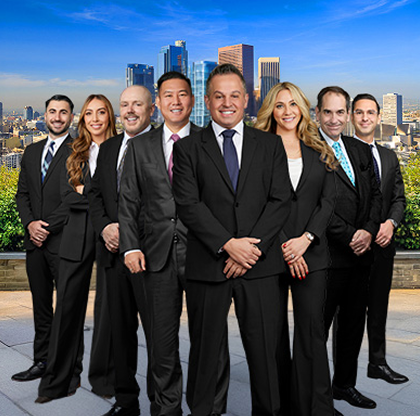
"We use over 100 years of combined legal experience to help our clients get the maximum compensation available under the circumstances."
NO FEES UNLESS WE WIN GUARANTEE
NO FEES UNLESS WE WIN GUARANTEE


