


Reviewed by Shant Nashalian, Litigation Attorney at BANA LAW, PC. Last reviewed: October 2026.
If a driver who was high, overmedicated, or mixing substances crashed into you, the shock often arrives with a hard question: how could anyone choose to drive like that? A drugged driving accident lawyer in Los Angeles can help with what comes next, because California treats drug impairment behind the wheel as seriously as drunk driving under Vehicle Code section 23152. For more than two decades, BANA LAW, PC has represented Californians hurt on freeways like the I-405 and the I-10, and we know how often these crashes bring surgeries, lost paychecks, and fear of driving again. This guide draws on that experience. It explains what California law says about driving on illegal drugs, cannabis, and prescribed medication, how impairment is proven, why a criminal conviction is not required for your injury claim, and when punitive damages may be available. It closes with the first steps to take after a crash.
Is It Illegal to Drive on Prescription Drugs in California?
Yes, when the medication affects your ability to drive safely. Subdivision (f) of Vehicle Code section 23152 makes it unlawful to drive under the influence of any drug, and subdivision (g) covers the combined influence of alcohol and drugs. Vehicle Code section 23630 adds that a legal right to use a drug is not a defense, and the California Driver’s Handbook warns that prescription and over-the-counter medicines, cough syrup included, can make driving illegal when they impair you. In our cases, the usual culprits are sleep aids, opioid pain relievers, anxiety medications, and muscle relaxants, which slow reaction time. Cannabis interferes with lane tracking, stimulants such as methamphetamine fuel speeding and aggression, and alcohol multiplies every one of these effects. A federal study of injured road users found that 55.8 percent of people seriously or fatally injured in crashes tested positive for at least one drug, with cannabinoids detected in 25.1 percent and opioids in 9.3 percent. A positive test does not always prove impairment, though, which is why the evidence below matters so much.

How Is Drug Impairment Proven After a Crash?
Proving drug impairment is harder than proving drunk driving, because California has no fixed legal limit for THC or most other drugs like the 0.08 percent blood alcohol limit for adult drivers. The federal guidance on impaired drivers notes that a drug’s presence in someone’s system does not by itself establish impairment, so the strongest cases connect test results to how the person was actually driving and behaving. Evidence that typically matters includes:
- The police report, including officer observations and anything the driver said about drug or medication use
- A drug recognition evaluation, if a specially trained officer examined the driver
- Blood or urine results, which officers may request under California’s implied consent law
- Dashcam, traffic camera, and business video, plus 911 recordings and witness statements
- Pharmacy and prescription records, obtained later through civil discovery
Some of this evidence disappears quickly, since business video along corridors like Wilshire Boulevard or Sepulveda Boulevard is often recorded over within days or weeks. That is why we send preservation letters early.
"Even now, after our case is over, Ryan is still there for us whenever we need him. They're good people."
NO FEES UNLESS WE WIN GUARANTEE
NO FEES UNLESS WE WIN GUARANTEE


Does the Driver Need a DUI Conviction for Me to Recover?
No. The Los Angeles County District Attorney or the Los Angeles City Attorney decides whether to prosecute, and that case asks whether guilt is proven beyond a reasonable doubt. Your civil claim, filed in Los Angeles County Superior Court if it becomes a lawsuit, asks only whether it is more likely than not that the driver’s negligence caused your injuries. A criminal case can still help yours. Under Evidence Code section 669, a person who violates a safety statute and causes the harm it was meant to prevent is presumed negligent, a concept called negligence per se. A guilty plea under Vehicle Code section 23153, which covers impaired drivers who injure someone, can also support your claim. If your own vehicle was uninsured, Proposition 213 normally bars pain and suffering damages, but Civil Code section 3333.4 lifts that bar when the at-fault driver is convicted of DUI for the crash.
Criminal DUI Case vs. Civil Injury Claim
| Question | Criminal DUI case | Civil injury claim |
|---|---|---|
| Who brings it | The District Attorney or City Attorney | You or your family |
| Standard of proof | Beyond a reasonable doubt | More likely than not |
| Main goal | Punishment and license consequences | Payment for your losses |
| Key deadline | Set by criminal law | Two years for most injury lawsuits; six months for a claim against a public entity |
Neither outcome automatically decides the other. Your civil deadlines keep running while the criminal case is pending. You do not have to sort through this alone. BANA LAW offers free, confidential consultations 24/7 on a no win, no fee basis, and we advance all case costs.
"I felt very protected, especially the way Ryan answered any question I had. I was very happy with the results of my case."
NO FEES UNLESS WE WIN GUARANTEE
NO FEES UNLESS WE WIN GUARANTEE
What Does a Drugged Driving Accident Lawyer in Los Angeles Do?
A drugged driving accident lawyer in Los Angeles investigates the crash, gathers proof that drug impairment caused it, identifies every insurance policy and responsible party, and pursues compensation for medical bills, lost income, and pain and suffering. Where the evidence supports it, the lawyer may also seek punitive damages for a driver’s conscious disregard of others’ safety. In practice, that means tracking the criminal case, obtaining toxicology results, consulting toxicologists, and handling the adjusters. It also means looking beyond the driver, since an employer may share responsibility if the driver was working, and your own uninsured motorist coverage may apply if the driver’s policy is too small. In a Los Angeles County case where a driver crossed into oncoming traffic and caused a head-on collision that took our client’s life, we secured a $5,250,000 settlement for the family. That case did not involve proven drug impairment, but it reflects the kind of catastrophic, wrong-side-of-the-road crash that dangerous driving produces. No amount of money undoes that loss, yet a recovery can give a family stability. Past results do not guarantee future outcomes, and every case is evaluated on its own facts.
"Our goal is to remove the stress of the case from you, so you can focus on treating your injuries and begin your road to recovery."
NO FEES UNLESS WE WIN GUARANTEE
NO FEES UNLESS WE WIN GUARANTEE
Can I Get Punitive Damages Against a Drugged Driver?
Sometimes. Under Civil Code section 3294, you must prove by clear and convincing evidence that the defendant acted with oppression, fraud, or malice, and malice includes despicable conduct carried out in willful and conscious disregard of others’ safety. California courts have long recognized that choosing to drive while knowingly intoxicated can meet that standard, and the same reasoning can apply to a driver who uses drugs knowing they will drive. We look at what the driver knew, whether the prescription label warned against driving, whether alcohol was also involved, and whether there is a prior DUI history. California public policy generally prevents insurers from paying punitive damages, so these awards usually come from the driver’s personal assets. Our guide on how punitive damages work in California explains the standard in more detail.
What Should I Do If I Am Hit by a Drugged Driver?
The steps you take in the first days can shape your claim. Here is what we recommend:
- Call 911 and accept medical care, because some injuries take hours to show.
- Tell the officer what you noticed, such as confusion, slurred speech, the smell of cannabis, or pill bottles in the car.
- Photograph the vehicles, the scene, your injuries, and the other driver’s plate and insurance card.
- Collect witness names and numbers, and note any nearby cameras.
- Report the crash to the DMV on an SR-1 form within 10 days if anyone was hurt or damage exceeded $1,000.
- Decline a recorded statement to the other driver’s insurer until you have spoken with a lawyer.
- Keep every medical bill and record of missed work.
Many of these steps apply after any collision, as our Los Angeles car accident lawyer page explains. If the other driver was drinking rather than using drugs, our Los Angeles DUI accident lawyer page covers how those claims are handled.
Talking With a Drugged Driving Accident Lawyer in Los Angeles
A crash caused by an impaired driver can feel senseless, but the law gives you real tools: a drug-impaired driver can be held responsible whether the drug was illegal, recreational, or prescribed, your claim does not depend on a conviction, and punitive damages may be available in the most reckless cases. A drugged driving accident lawyer in Los Angeles can preserve the evidence and deal with the insurers while you focus on healing.
- Get medical care right away and tell officers about any signs of impairment you noticed.
- Preserve evidence early, including photos, witness contacts, and camera footage.
- Track your deadlines: two years for most injury lawsuits and six months for claims against public entities.
How BANA LAW Can Help
Our trial attorneys handle impaired driving cases from the first preservation letter through settlement or trial. When a crash takes a life, our Los Angeles wrongful death lawyer team helps families pursue accountability. If an insurer argues that you share the blame, our article on comparative negligence in California explains how fault is divided.
Drugged Driving Accident Lawyer in Los Angeles: Frequently Asked Questions
Can I sue a driver who was high on marijuana when they hit me?
Yes, a driver impaired by cannabis can be held responsible under California negligence law, even though adult recreational use is legal. Your claim can seek medical costs, lost income, and pain and suffering.
Is there a legal THC limit for driving in California?
No, California has not adopted a set blood level for THC the way it uses 0.08 percent for alcohol. Impairment is shown instead through officer observations, drug recognition evaluations, blood tests, and the person’s driving.
What if I was also partly at fault for the crash?
California follows pure comparative negligence, so you can still recover if you share some blame. A person found 20 percent at fault could recover 80 percent of their damages.
How long do I have to file a claim?
Most California injury lawsuits must be filed within two years, and a claim against a public entity generally must be presented within six months. Our guide to the personal injury statute of limitations in California explains the exceptions.
Can families of victims sue?
Yes, family members listed in Code of Civil Procedure section 377.60, such as a spouse or children, can bring a wrongful death claim. Those claims can seek lost financial support and companionship.
Does insurance cover DUI drivers?
In most cases, the impaired driver’s liability policy still pays for injuries caused by negligent driving, up to its limits. California’s minimums are $30,000 per person and $60,000 per accident, which is why we also review your uninsured and underinsured motorist coverage.
Will insurance cover punitive damages?
Generally no, because California public policy does not allow insurers to pay punitive damages for the person being punished. Any punitive award usually must be collected from the driver’s own assets.
Is a DUI conviction proof of negligence?
A conviction or guilty plea can be strong evidence, and a proven statutory violation can create a presumption of negligence under Evidence Code section 669. The driver can still dispute causation and damages.
Must the accident be caused by drinking or drug use?
You must show that the driver’s negligence caused your injuries. Even if the drugs cannot be tied directly to the crash, a driver who ran a light is still responsible for that careless driving.
What if I’m hit by a DUI driver with no insurance?
Your own uninsured motorist coverage may pay for your injuries, up to your policy limits. You may also pursue the driver personally, though collecting depends on the driver’s assets.
Who pays my medical bills if a driver under the influence of cannabis hits me?
The at-fault driver’s insurer usually pays at the end of the claim, so your health insurance or medical payments coverage often pays first. Those payers may seek reimbursement from your settlement, which a lawyer can sometimes negotiate down.
What happens when a stoned or high driver causes a car accident?
The driver can face criminal charges under Vehicle Code section 23153, DMV license action, and a separate civil claim from the people they injured. Your claim does not depend on how the criminal case ends.
Talk to BANA LAW Today
If a drugged driver hurt you or someone you love, you can speak with our team for free, day or night. Consultations are confidential, we work on a no win, no fee basis, and we advance all case costs, so you pay nothing unless we recover compensation for you. Call (866) 418-1437 to discuss your options. Se Habla Español.
Legal Disclaimer
This article provides general information about California law and is not legal advice. Reading it or contacting BANA LAW, PC through this page does not create an attorney-client relationship. Every case depends on its own facts, so please consult a licensed California attorney about your situation. Past results do not guarantee future outcomes.

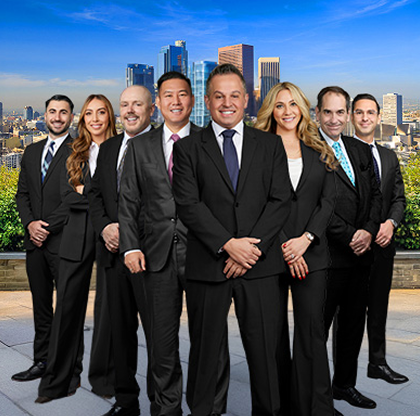
"We use over 100 years of combined legal experience to help our clients get the maximum compensation available under the circumstances."
NO FEES UNLESS WE WIN GUARANTEE
NO FEES UNLESS WE WIN GUARANTEE


